
Browse the Collection Record
Images
Metadata
Object Name |
King Uzziah of Judah |
Object ID# |
MC 0236 |
Date |
Reign: c. 792-740 BC |
Description |
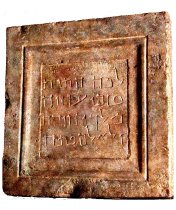
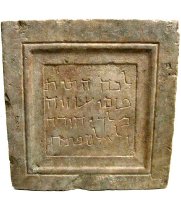
The limestone ossuary plaque bears the Aramaic inscription, "Hither were brought the bones of Ussiah, king of Judah, do not open." The inscription, which probably dates to the Second Temple Period, refers to the transfer of Uzziah's bones. During the latter part of his reign, Uzziah became a leper and was confined to his palace. Originally buried in the Citadel of David, his bones were perhaps moved from the grave because of his desease. This Aramaic inscription definitely refers to the transfer of the bones of King Uzziah (who was a leper) to a new tomb. Tosefta Baba Bathra 1, 11 notes that "All the burials are to be cleared except the tomb of a king and the tomb of a prophet." It is related in II Chronicles 26:23 that "Uzziah slept with his fathers, and they buried him with his fathers in the field of the burial which belonged to the kings; for they said, He is a leper", and this was interpreted by the Commentators to mean not in the royal necropolis which was within the city. Josephus Flavius, in Antiquities IX, 226-227, relates that Uzziah "was buried alone in his gardens." This, it would seem that in the Second Temple period the bones of this king were transferred to a secondary tomb; the present inscription would have been affixed on or above the opening of the tomb niche. This inscriptions is written in the square Hebrew script similar to that of the ossuaries of the Second Temple period. Similar inscriptions, forbidding the opening of the tomb, have been found in tombs and on ossuaries. It was discovered some forty years ago in the collection of the Russian Convent on the Mount of Olives, where it appears to have been since the end of the 19th century. The exact provenance is thus unknown. |
Place of Origin |
Jerusalem Israel |
Medium |
Plaque on Ossuary |
Material |
Limestone |
Location of Original |
Russian Church Mount of Olives Jerusalem |
Dimensions Details |
H 350-W335 mm |